







The study of life begins at the microscopic level with the cell. These The Fundamental Unit of Life Class 9 Notes provide a clear and simple overview of how every living organism is built from these tiny biological units.
Understanding Cell Notes Class 9 is essential because it explains not just what we are made of, but how our bodies perform vital functions like breathing, growing, and producing energy.
PW Neev Class 9 Modules Combo of 6 Books offers complete syllabus coverage, concept clarity, practice questions, and revision support for Class 9 students.
The cell is the basic structural and functional unit of life, discovered by Robert Hooke.
Organisms can be unicellular or multicellular. Key cell components include the cell wall, plasma membrane, nucleus, and various organelles like ER, Golgi apparatus, lysosomes, mitochondria, and plastids. Cells engage in transport mechanisms like diffusion, osmosis, and active transport, crucial for their survival and function.
PW CBSE Class 9 Question & Concept Bank Science provides concept clarity, diagrams, competency-based questions, and extensive practice for exams.

What is The Fundamental Unit of Life?
"The Fundamental Unit of Life" refers to the cell, the most basic structural and functional component of all living organisms.
These notes cover the cell's discovery, its various parts, their functions, and how they contribute to the overall life processes. Understanding cell notes class 9 is crucial for building a strong foundation in biology.
The Fundamental Unit Of Life Class 9 Notes
Below are the structured Fundamental Unit Of Life Class 9 Notes created by following Latest Class 10 Syllabus:
What is a Cell?
A cell represents the fundamental structural and functional unit of all living organisms. It is the basic building block of life and possesses the ability to replicate independently.
Discovery of Cell
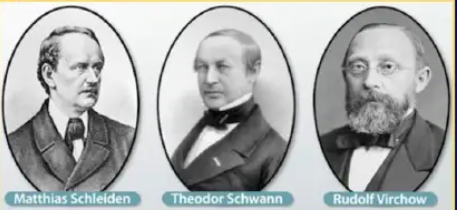
The discovery of the cell marked a significant milestone in biology. Robert Hooke first observed and named "cells" in 1665 while examining cork slices under his self-designed microscope. These were, however, dead cells. Further discoveries led to a deeper understanding of cellular structures. Several pioneering scientists made significant contributions to our understanding of the cell.
|
Scientist |
Year |
Discovery/Contribution |
|---|---|---|
|
Antonie Van Leeuwenhoek |
1674 |
Living cell (in pond water) |
|
Robert Brown |
1831 |
Discovered nucleus in cell |
|
Purkinje |
1839 |
Protoplasm |
Classification of Organisms - Based on Number of Cells
Organisms are classified into two main types based on the number of cells they possess.
-
Unicellular Organisms: These organisms are made up of a single cell. Examples include bacteria, Amoeba, and Paramecium.
-
Multicellular Organisms: These organisms consist of more than one cell. Plants and animals are common examples.
Different Size of Cell
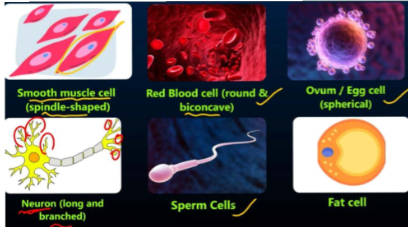
Cells exhibit a wide range of sizes. In the human body, the ovum (egg cell) is the largest cell, while the sperm cell is the smallest. Mycoplasma, also known as PPLO (pleuropneumonia-like organisms), represents some of the smallest known cells.
Structural Components of Cell - What a Cell is Made Up Of
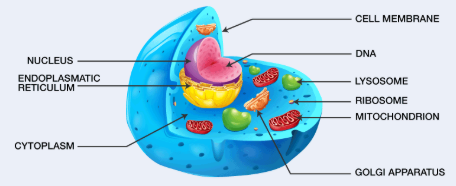
Cells are complex structures composed of various specialized components, each performing a specific function.
-
Cell Wall
The cell wall is a non-living, rigid outermost covering found in plants, bacteria, and fungi, but absent in animal cells. It provides shape and structural strength to plant cells, forming an outer layer to the plasma membrane. Composed of cellulose in plants, it also protects the cell from mechanical damage and prevents bursting.
-
Plasma Membrane / Cell Membrane
Present in all living organisms, the plasma membrane is the outermost living and flexible covering of the cell. It is made up of lipids and proteins arranged in a bilayer. This membrane is selectively permeable, controlling the movement of specific materials into and out of the cell.
-
Nucleus
The nucleus is the control center of the cell, encased by a double membrane called the nuclear envelope. This membrane has pores that regulate the movement of particles between the nucleus and the cytoplasm. The nucleus controls the cell's genetic material, DNA.
Transport Across Membrane
The movement of materials across the plasma membrane occurs through two primary mechanisms: passive transport and active transport.
-
Passive transport involves the movement of molecules from an area of higher concentration to an area of lower concentration. This process does not require energy and is relatively slow. Small molecules and water molecules typically move via passive transport. It is not significantly affected by temperature.
-
Active transport involves the movement of molecules from an area of lower concentration to an area of higher concentration. This process requires energy, usually in the form of ATP. It is a rapid process and is affected by temperature. Large molecules typically undergo active transport.
Diffusion: Passive Transport
Diffusion is the spontaneous movement of substances (solids, liquids, and gases) from a region of high concentration to a region of low concentration. This is a passive transport mechanism. For instance, carbon dioxide (CO₂) and oxygen (O₂) move across the plasma membrane by diffusion. Water molecules (H₂O) also move within the cell from higher to lower concentration through diffusion.
Osmosis: Passive Transport
Osmosis is a special case of diffusion involving the spontaneous movement of solvent or water molecules from a region of high water concentration (low solute concentration) to a region of lower water concentration (high solute concentration) through a selectively permeable membrane. It requires two conditions: the movement must be of solvent or water, and a selectively permeable membrane must be involved. Examples include unicellular freshwater organisms gaining water and plant roots absorbing water.
Endocytosis and Exocytosis: Active Transport
These are forms of active transport.
-
Endocytosis: The process by which a cell engulfs food and other substances from its external environment. This is observed in organisms like Amoeba.
-
Exocytosis: The process by which a cell expels waste materials or undigested food particles to the external environment. This is also seen in Amoeba.
Protoplasm
Protoplasm refers to the living contents of a cell, excluding the cell wall. It encompasses the cytoplasm and the nucleus.
Plasmolysis
Plasmolysis is the phenomenon where the protoplasm of a living plant cell shrinks away from the cell wall when placed in a hypertonic solution. Dead plant cells do not exhibit plasmolysis.
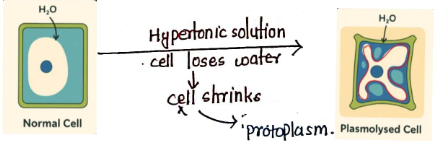
Conversely, in a hypotonic solution, the protoplasm swells and exerts pressure on the cell wall, which in turn exerts equal pressure back, preventing the plant cell from bursting.
DNA-Deoxyribonucleic Acid
DNA is a thread-like structure found within the nucleus. It carries information about an organism's characteristics and is responsible for transmitting genetic information from one generation to the next.
Gene
A gene is a specific segment of DNA that contains the code for a particular character, such as eye color, skin color, nose shape, or hair type.
Prokaryotic Cell vs. Eukaryotic Cell
Cells are broadly categorized into prokaryotic and eukaryotic types based on their structural organization. Understanding the differences is a key part of the fundamental unit of life class 9 notes.
These classifications highlight significant evolutionary divergences and functional distinctions. The table below outlines the primary differences:
|
Prokaryotic Cell |
Eukaryotic Cell |
|---|---|
|
Nuclear region is not well defined (Nucleoid). |
Nuclear region is well defined (Nucleus). |
|
Do not have Nuclear Membrane |
Have Nuclear Membrane |
|
Membrane-bound cell organelles absent |
Membrane-bound cell organelles present |
|
Only one chromosome |
More than one chromosome |
|
Size is generally small (1–10 μm) |
Size is generally large (5–100 μm) |
|
Flagella is present for movement |
No Flagella |
|
Example: Bacteria |
Example: Plants, animals, fungi |
Cell Organelles
Cell organelles are specialized structures within a cell that perform specific functions, similar to how organs operate in a larger organism. The different cell organelles, along with its principal functions, are as follows:
-
Endoplasmic Reticulum (ER): → Protein and Lipid Synthesis
The ER is a large network of membrane-bound tubes and sheets. It facilitates the transport of materials between the nucleus and the cytoplasm and is involved in the synthesis of lipids and proteins, which form the plasma membrane.
The endoplasmic reticulum exists in two forms, each with distinct structures and functions. Understanding these differences is crucial for comprehending protein and lipid synthesis within the cell.
-
Golgi Bodies/Apparatus → Store, Modify, Pack
Golgi bodies are membrane-bound vesicles arranged parallel to each other in stacks called cisterns. Their functions include storage, modification, and packaging of products like proteins and lipids synthesized by the ER, dispatching them to various targets. They are also involved in the formation of lysosomes. If a cell lacked Golgi apparatus, essential materials would not be properly packaged or transported, and lysosomes would not form, leading to a build-up of waste and impaired cell function.
-
Lysosomes → Waste Disposal
Lysosomes are sacs filled with powerful digestive enzymes, acting as the cell's waste disposal system. They clean the cell by digesting foreign materials, such as bacteria, and damaged organelles. Lysosomes are often called "suicide bags" because if a cell is damaged, they may burst and digest the cell itself.
-
Mitochondria → "Powerhouse of the Cell"
Mitochondria are known as the "powerhouses of the cell." They have a porous outer membrane and a deeply folded inner membrane, which increases the surface area for ATP (Adenosine Triphosphate) generation. ATP is the energy currency of the cell. Mitochondria also possess their own DNA and ribosomes.
-
Vacuoles → Turgidity, Rigidity, Storage Sac
Vacuoles are storage sacs within a cell. They are typically large in plant cells and small in animal cells.
-
Plants: Vacuoles can occupy 50-90% of the cell volume. They provide turgidity and rigidity to the cell and store amino acids, sugars, organic acids, and proteins.
-
Amoeba (unicellular): Food vacuoles contain the food items that the amoeba consumes and also help in expelling waste.
Membranes
Several organelles within a cell are enclosed by membranes. These include the Nucleus, Mitochondria, Plastids, Endoplasmic Reticulum, Golgi apparatus, Lysosomes, and Vacuoles. Ribosomes, however, are an exception; they are protein factories and lack a membrane, present in both prokaryotic and eukaryotic cells.
Cell Division
Cell division is the process by which new cells are produced from existing cells. This fundamental biological process is essential for growth, repair, and reproduction in organisms.
The table below compares the two main types of cell division:
|
Mitosis |
Meiosis |
|---|---|
|
Produces 2 new daughter cells |
Produces 4 new daughter cells |
|
Daughter cell has same number of chromosomes as mother cell |
Daughter cells have half the number of chromosomes as mother cells |
|
Equational division (Equal) |
Reductional division |
|
Helps in growth and repair of tissues |
Required for production of gametes |
The Fundamental Unit Of Life Class 9 Notes PDF
Downloading the The Fundamental Unit Of Life Class 9 Notes PDF is an essential step if you want to understand Biology in a better way. This PDF is organized to follow the NCERT Solutions, moving from the initial discovery of the cell by Robert Hooke to the complex functions of modern-day organelles.
By studying through the PDF, you can easily understand the classification of unicellular and multicellular organisms, as well as the critical differences between prokaryotic and eukaryotic structures during your revision sessions.
CBSE Class 9 Science Notes Chapter 5 FAQs
What is the Fundamental Unit of Life?
Why are cells called the Fundamental Unit of Life?
What is the main difference between prokaryotic and eukaryotic cells?
What is the function of the cell wall in plant cells?
What is osmosis and how is it different from diffusion?







Get Free Counselling Today
and Clear up all your Doubts
 Live & recorded classes available at easeDashboard for progress trackingLakhs of practice questions

